Mental Health Disparity: Why Minorities are Undertreated

by | Jul 31, 2024

Why minority communities struggle to access reliable mental health services and what providers can do to help.

mental health disparity

Mental illness is a widespread issue affecting individuals from all backgrounds. However, research indicates a significant mental health disparity within minority communities due to a lack of treatment. According to data from the United States Department of Health and Human Services, black Americans are more likely than white adults to report mental health struggles while only one in three receive treatment. Meanwhile, a report showed 35 percent of Hispanic/Latin adults received treatment for mental health issues every year, compared to the United States average of 46 percent. The disparity is also found in the Asian American and Pacific Islander community. A similar report found approximately 21 percent of Asian adults with a mental illness received treatment in 2020, the lowest rate of racial/ethnic backgrounds.

This blog explores four reasons behind the undertreatment of mental illness in these communities and highlights the barriers people face.

1. Socioeconomic Barriers to Mental Health Services

Socioeconomic disparities significantly limit access to mental health services. Some minority communities frequently experience higher poverty rates and lower income levels compared to the general population. Limited financial resources make it difficult to afford mental healthcare, including therapy, medication and other essential treatments. Additionally, a lack of health insurance or underinsurance exacerbates the problem, making it challenging for individuals to access necessary care.

2. Cultural Stigmas

Cultural stigmas surrounding mental illness also play a crucial role in the mental health disparity we see in minority communities. In many cultures, mental health issues are stigmatized and perceived as a sign of weakness or personal failure. This stigma often prevents individuals from seeking help or openly discussing their mental health concerns. Fear of judgment, discrimination or negative social consequences creates significant barriers to treatment, leading to the underutilization of mental healthcare services.

3. Systemic and Cultural Barriers

Systemic and cultural barriers also present a significant challenge for minorities seeking mental health services. That’s why initiatives focusing on diversity and inclusion are so important in the healthcare marketplace. If a patient is constantly encountering language barriers and other signs of cultural ignorance within their chosen provider, they are less likely to develop trust in that provider and may feel discriminated against. In fact, language-based discrimination is a serious problem in the mental health field, according to a 2023 study, performed by the nonprofit Rand Corporation. The study, involving nearly 400 mental health crisis clinics in California, found nearly one in five Spanish-speaking callers were hung up on or told no one could assist them – even though an estimated 28 percent of California residents speak Spanish at home. It’s critical for mental healthcare providers to build trust in minority communities if they are to treat the mental health challenges they face. They can do this by adopting the initiatives on diversity and inclusion discussed earlier. These initiatives can give employees a greater cultural understanding of their patient population, allowing mental health professionals to address cultural stigmas, navigate religious differences and break down language barriers more effectively.

4. Lack of Awareness

The simplest reason minority communities may lack mental health treatment is because they don’t know about the resources available to them. Language barriers play another pivotal role in this problem. If mental healthcare providers don’t address these language barriers in their promotional and marketing materials, the message won’t reach the community.

It Takes a Comprehensive Approach

Addressing the under-treatment of mental illness in minority communities requires a comprehensive approach involving increased access to affordable and culturally competent care, raising awareness, reducing stigma, and ensuring adequate funding for mental health resources.  By tackling these issues, we can create a more equitable and supportive mental healthcare system for all.


Chapters Health System is committed to serving the needs of its patients, families, caregivers, health providers, partners, and communities.

For more information, please call our helpful Chapters Health and HospiceHelp24® team at 1.866.204.8611 or Contact Us.

Kristen Hopper

Kristen Hopper

About Us

Established in 1983 as a community-centered, nonprofit entity, Chapters Health has grown exponentially through its radical approach to healthcare that leverages a one-of-a-kind system to support patients, families, and caregivers across the country, while remaining grounded in the mission of taking care of patients, or taking care of those who do®.

Learn More

Chapters Health System Announces Selection on Hospital and Health System CFOs to Know

Willamette Vital Health Finalizes Affiliation with Chapters Health System

Nathan Adelson Hospice Finalizes Affiliation with Chapters Health System

Andrew Molosky Makes Becker’s Hospital Review 2025 Great Leaders in Healthcare List

Andrew Molosky on podcast

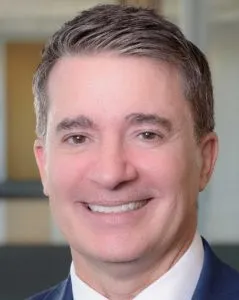
John J. Whyte, MD, MPH

CEO and Executive President,
American Medical Association

John Whyte, MD, MPH serves as the CEO and Executive Vice President of the American Medical Association, the nation’s largest physician organization.

Prior to the AMA, Dr. Whyte served as the Chief Medical Officer at WebMD, leading initiatives that expanded strategic partnerships, created new business opportunities, and positioned WebMD at the forefront of digital health innovation. He was a pivotal force in evolving WebMD’s digital platforms from content delivery engines to powerful tools connecting consumers directly to care, establishing critical new revenue models. He is a recognized leader in healthcare delivery and regulation and is consistently named as one of the Top 20 Health Influencers.

Before joining WebMD, Dr. Whyte served as Director of Professional Affairs and Stakeholder Engagement at the U.S. Food and Drug Administration’s Center for Drug Evaluation and Research. There, he spearheaded groundbreaking initiatives to modernize clinical trial design, expand diversity in research, and advance the regulatory use of real-world evidence — efforts that continue to impact patient-centered drug development today.

Earlier, as Chief Medical Expert and Vice President of Health and Medical Education at Discovery Channel, Dr. Whyte launched educational programming that captured both medical and mainstream audiences, successfully aligning mission-driven health education with corporate funding strategies and building new multimedia brand identities.

At the Centers for Medicare & Medicaid Services (CMS), Dr. Whyte played a pivotal role in formalizing Medicare’s national coverage decision process, directly shaping payment policies and advancing innovative models to improve healthcare outcomes. His experience at CMS demonstrates a deep understanding of health policy, reimbursement strategies, and the critical intersection of clinical innovation and payment models.

A board-certified internist, Dr. Whyte completed his MD at Hahnemann University School of Medicine, his residency at Duke University Medical Center and earned his MPH in Health Policy and Management at Harvard University. He previously served as a health services research fellow at Stanford University. An accomplished author, Dr. Whyte has written extensively for both professional and consumer audiences, including five best-selling book

Andrew Molosky on podcast

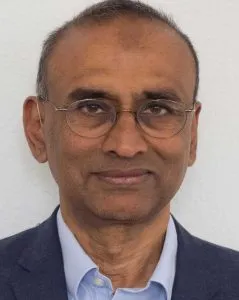
Dr. Venki Ramakrishnan

Nobel Laureate

Venki Ramakrishnan is an American and British molecular biologist who shared the 2009 Nobel Prize in Chemistry. He currently works at the world-renowned MRC Laboratory of Molecular Biology in Cambridge, England and from 2015-2020, he served as President of the Royal Society, one of the world’s oldest scientific organizations. He is best known for his work on protein synthesis, the process by which genetic information is used by the ribosome to make the thousands of proteins that make life possible. This process is fundamental to all life and its dysfunction leads to many diseases as well as to aging. He is a member of the US National Academy of Sciences and was knighted by the British government in 2012. In 2022, he received one of Britain’s highest civilian honors, the Order of Merit, which is restricted to 24 people across all fields.

In addition to his academic work, Ramakrishnan is a science partner of the venture capital fund Ahren Innovation Capital, and on the boards of the AI-based drug development company, Isomorphic Labs, and the British Library. He recently co-founded RNAvate, an RNA therapeutics company based on stable, next-generation RNA molecules. In the public arena, he played a leadership role when he was president of the Royal Society, including dealing with the consequences of Brexit and helping convene the Society’s response to provide advice during the covid pandemic and did a significant amount of public engagement including articles in the press and appearances on national media.

Ramakrishnan is the author of two popular books: Gene Machine (2018), a very frank scientific memoir about the race for the structure of the ribosome that led to the Nobel Prize; and Why We Die: The New Science of Aging and the Quest For Immortality (2024), which looks at the biology of aging and efforts to combat it.

Andrew Molosky on podcast

Marwa El-Menshawi, MD, MPH

Chief Operating Officer, PACE Chapters Health System

Marwa El-Menshawi, MD is the Chief Operating Office for Hope PACE. She is a triple board-certified physician, specializing in Family, Geriatric and Hospice Medicine. Dr. El-Menshawi's focus is on improving the lives of those affected by advanced age and serious illness through innovation in high complexity and value-based care. She has almost 20 years of clinical, academic and healthcare leadership experience.

Dr. El-Menshawi is a member of the American Academy of Family Medicine and the National PACE Association. She serves on the Mayor's Committee for Livability and Healthy Aging, focused on serving the community through advocacy and education, recommending and promoting programs and initiatives that benefit older adults.

Dr. El-Menshawi earned her Medical Doctorate as a Magna Cum Laude graduate from the University of Alabama School of Medicine and was awarded the distinguished membership into the Alpha Omega Alpha medical honors society, along with multiple academic achievement awards including the American Medical Women's Association Glasgow-Rubin Achievement Citation, the Merck Manual Award and the Peacock Teaching Fellowship. She completed her residency in Family Medicine and Certificate of Added Qualifications in Geriatric Medicine following a Geriatrics Fellowship at Advent Health in Orlando, FL. She serves as a Clinical Assistant Professor of Geriatrics at the Florida State University College of Medicine and an Assistant Professor of Family Medicine at the University of Central Florida College of Medicine.

Andrew Molosky on podcast

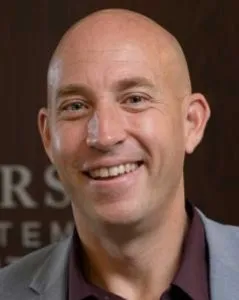
Andrew Molosky

President and CEO, Chapters Health System

Andrew Molosky is the President and Chief Executive Officer of Chapters Health System, the country's defining chronic illness organization, comprised of more than 30 different companies and programs, including the nation's largest nonprofit hospice network, PACE, value-based care such as CareNu, a Medicare Advantage plan, managed services organizations, technology solutions, advanced illness offerings, and more.
Established in 1983 as a community-centered, nonprofit entity, Chapters Health has grown exponentially through Molosky's innovative approach to healthcare, becoming a national leader recognized by Great Places to Work, Fortune, USA Today, and others for being a top place to work.
As a leading voice in healthcare, Molosky is routinely engaged as a consultant, speaker, and mentor. Molosky is modeling and leading across several industries concurrently.
Molosky has more than 20 years of experience spanning an array of geographies and organizations, including publicly traded, privately held, and nonprofit. He completed his undergraduate work at the University of Toledo and his Master of Business Administration from the Ken Blanchard College of Business at Grand Canyon University, additionally holding his Fellowship from the American College of Healthcare Executives.

Share This